

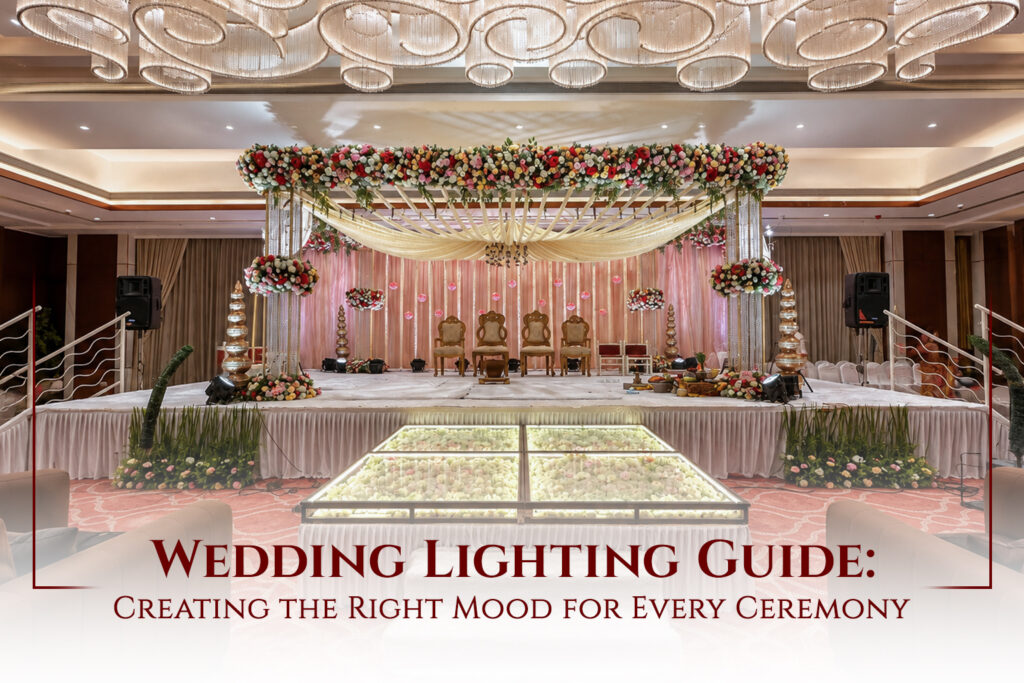
Lighting is usually the last item on a wedding planning list and the first thing guests notice. It decides how the decor reads, how the room feels and how the photographs turn out. Two families can book the same hall and the same florist and the day will look completely different depending on how the light was handled. This blog covers the three areas that shape a wedding most: the entrance, the stage and the backdrop, along with what changes from one function to the next.
Entrance and Lobby Lighting: Setting the First Impression
The entrance is where guests form their opinion of the event and it takes very little light to do it well.
Warm light works best here. Anything cool or bluish makes a lobby feel like a waiting area. Up lights placed along the walls lift the space without shining into anyone’s eyes and small lights along the pathway guide people towards the hall. Keep the brightest fixtures above eye level or close to the floor, never straight ahead at face height.
Remember that guests stop at the entrance to take photographs. If the welcome board, the flower arrangement or the name signage is unlit, those photographs disappear into shadow. A single focused light on each of them is enough. At Bhanushali Banquets, the grand entrance lobby at every venue gives decorators the room to layer lighting properly instead of relying on one bright fixture overhead. This becomes particularly valuable in our banquet hall in Ghatkopar, where the entrance often sets the tone for the rest of the celebration.
Stage and Backdrop Lighting for the Main Ceremony
Most stage lighting problems come from one mistake. The backdrop gets all the attention and the couple standing in front of it is left in the dark.
Face lighting and backdrop lighting are two separate jobs. The couple needs a soft, even light from the front, positioned high and angled downwards so it does not create harsh shadows under the eyes. A second light from the side adds depth. Photographers rely on this and no amount of editing recovers a face that was never lit.
Keep coloured light off the couple. Deep blues, reds and greens look striking on a wall and unflattering on skin and they carry through to every photograph taken that evening. Save the colour for the backdrop and the surrounding walls and keep the light on the couple warm and neutral.
Also plan for a bright, even wash across the front of the stage for the garland exchange, the ring ceremony and the family photographs. These moments involve a lot of people moving at once and pool lighting leaves half of them in the dark. Couples hosting their celebrations often discuss these details with their lighting team early in the planning process to avoid last-minute adjustments.
Matching the Lighting to Your Backdrop Material
Different backdrops need different treatment.
Floral backdrops come alive with light angled across them from the sides, which brings out texture and shape. Light thrown flat from the front makes flowers look painted on.
Fabric backdrops respond well to lights placed behind sheer panels, giving a soft glow that suits pre-wedding functions. Solid drapes need front lighting instead, with the fixtures kept far enough back to avoid hot spots.
LED screens create their own light and a great deal of it. When you have a screen behind the stage, the front lighting on the couple has to be raised to match or the couple will appear as silhouettes against a glowing wall.
Lighting Requirements for Each Wedding Function
Haldi: Usually held in the morning, so natural light does most of the work. Yellow and gold accents suit the ritual and gentle fill lighting keeps faces visible in the shade.
Sangeet: This is where moving lights, colour and effects belong. Keep a steady base wash across the floor underneath all of it, so the videographer can still record the performances and guests can see where they are walking.
Wedding ceremony: Steady and warm throughout. The mandap needs light from above so the rituals and the fire remain visible and the pandit should be able to read comfortably. Avoid anything that changes or moves during the ceremony.
Reception: Attention sits on the stage, so light it properly and add a little light along the queue where guests wait, since this is where most of the evening’s photographs happen. Soft light on the dining tables helps guests settle in.
Practical Points to Discuss with Your Lighting Team
Ask for a trial at the same hour your function is scheduled, because a setup that looks perfect at four in the afternoon behaves differently at eight in the evening.
Confirm the power load with the venue in advance and check that backup is in place. Ask your photographer and videographer what they need before the rig is finalised, since they work with the light you give them. Walk the room once the lights are up and look for glare on polished flooring, cables crossing walkways and fixtures aimed at guest seating. This final walkthrough becomes even more important at a banquet hall in Airoli, where several lighting elements often work together across different event spaces.
Lighting done well is rarely noticed on its own. Guests simply remember that everything looked beautiful and everyone looked their best.
Create The Perfect Atmosphere with Bhanushali Banquets
Looking for a banquet hall that gives you complete flexibility over décor, lighting and event design? Bhanushali Banquets offers elegant venues, spacious layouts and dedicated event spaces designed for weddings of every size. Explore our venues and start planning a celebration where every detail shines.
The right lighting depends on the size of the venue, the function being hosted and the decor. Warm ambient lighting creates a welcoming atmosphere, while focused lights on the stage, entrance and key decor elements ensure the venue looks balanced in person and in photographs.
Yes. Proper lighting helps photographers and videographers capture natural skin tones, sharp details and clear expressions. Even the best cameras cannot fully correct poor lighting, making a well-planned lighting setup essential for high-quality wedding photos and videos.
Yes. Every celebration has different lighting requirements. Haldi benefits from natural daylight, Sangeet suits dynamic coloured lighting, the wedding ceremony requires steady warm illumination and receptions often combine elegant ambient lighting with focused stage lighting.
It is best to finalise your lighting plan after your decor and stage design are confirmed. This allows your lighting team, decorator and photographer to coordinate the placement of fixtures and ensure the venue looks its best throughout the event.