

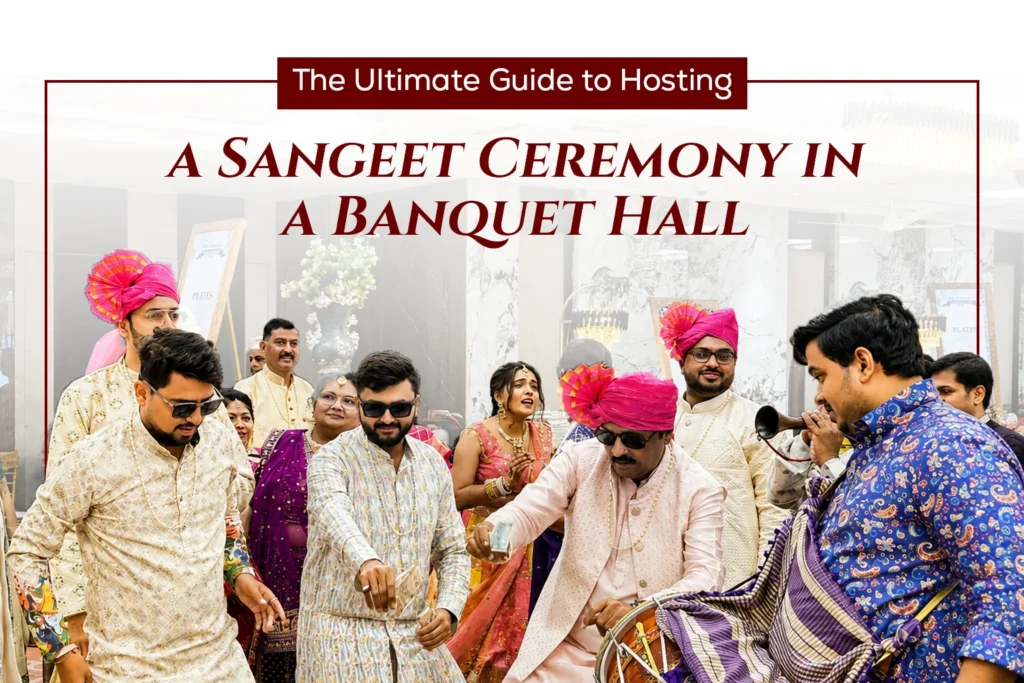
The Sangeet is one of the most anticipated events in an Indian wedding. It is the night when both families come together, let their hair down, and celebrate with music and dance. It sets the tone for the wedding, and more often than not, it is the event that guests talk about long after the wedding is over.
If you are planning a Sangeet in Mumbai, a banquet hall is easily one of the best choices you can make. Here is everything you need to know to get it right.
What is a Sangeet and Why Choose a Banquet Hall?
Traditionally, the Sangeet was an intimate gathering held at home, with family members singing folk songs and performing small dances. Today, it has transformed into a full-scale celebration with choreographed performances, DJ sets, live music, and elaborate décor.
Hosting this at home is simply not practical anymore. You need space for a dance floor, a stage, a sound system, and seating for a large number of guests. A banquet hall gives you all of this under one roof. You also get a dedicated team to manage logistics, which takes a lot of pressure off the family during an already busy week.
Planning and Booking Tips
Book your banquet hall at least four to six months in advance, especially in Mumbai where venues fill up quickly during the wedding season, which typically runs from November to February and again around April to May.
When you visit the venue, ask these questions: What is the maximum capacity? Is the sound system included or will you need to arrange it separately? Are there separate rooms for makeup and getting ready? What is the parking situation? Is there a kitchen on-site or will you need to bring in a caterer?
Set your guest count before you book. A hall that feels spacious for 150 people will feel cramped if 250 show up. Always factor in space for a dance floor and a stage, as these take up more room than most people expect.
Space Setup and Décor
The décor is what creates the first impression. Popular Sangeet themes in Mumbai right now include floral maximalism, Bollywood glam, pastel with fairy lights, and gold and ivory royal setups. Pick a theme that reflects the couple’s personality and stick to it.
The stage should be visible from all corners of the hall. If the hall has pillars, work around them early in the planning stage rather than realising the problem on the day. The dance floor should be large enough for group performances, ideally placed at the centre or front of the hall.
Lighting makes an enormous difference. String lights create a warm and festive atmosphere. Spotlights on the stage keep the focus on the performers. LED walls or backdrop screens are increasingly common and add a polished, professional feel to the evening.
Entertainment and Performances
The performances are the heart of the Sangeet. Most families plan a mix of group dances, solos, and a couple of surprise acts. It is a good idea to create a running order and share it with the anchor or MC at least two to three days before the event.
Hire a professional anchor. A good MC keeps the evening moving, manages transitions between acts, and makes sure the energy does not dip. When it comes to music, a DJ is the most common choice, but if your budget allows, a live band adds something extra. Some families opt for both, with a live band for the first half and a DJ to close out the night.
Sound quality is non-negotiable. Always do a sound check before guests arrive. A poor sound system can ruin even the best performance.
Food and Beverages
The food setup at a Sangeet tends to be more relaxed than at the wedding reception. A cocktail-style arrangement with live food stations works well because it keeps guests moving around and socialising. Popular choices in Mumbai include chaat counters, a pav bhaji or frankies station, a live pasta or stir-fry counter, and a mocktail or fresh juice bar.
If you do have a sit-down dinner, schedule it after the main performances so it does not break the flow of the evening. Guests tend to settle in once they sit down to eat, and getting them back on the dance floor afterwards is a challenge.
Practical Mumbai-Specific Tips
Mumbai traffic is unpredictable. If your hall is in a busy area like Andheri, Bandra, or Lower Parel, factor in extra travel time and communicate the start time clearly to guests. Venues in Navi Mumbai and the Western suburbs often have better parking facilities, which is worth considering for a large guest list.
Book your hair and makeup team to use the hall’s getting-ready rooms rather than doing it all at home and travelling across the city. It saves time and reduces stress considerably.
Check with your venue about noise regulations. Some areas in Mumbai have restrictions on amplified music after 10 pm. Knowing this in advance helps you plan the schedule properly and avoid any last-minute issues.
Ready to Book Your Sangeet Venue?
A great Sangeet starts with the right venue. If you are looking for a banquet hall in Mumbai that can handle everything from setup to catering, get in touch with Bhanushali Banquets today. We will help you plan an evening your guests will genuinely remember.
FAQ
The cost depends on the venue, number of guests, décor, cuisine and entertainment. Most families spend anything from a few lakhs to much more, depending on the scope of the party. Setting up a budget early will help you avoid last minute costs.
A Sangeet is normally four to six hours long. This allows adequate time for performances, food and dancing, without having the event feel too long for guests.
Guests often like to wear festive clothing that’s comfortable enough to dance in. Traditional Indian dress and Indo-western outfits are both popular selections for the event.
Yes, children’s performances are generally crowd favourites. They have easy, brief routines so they may stay confident and enjoy the experience.