

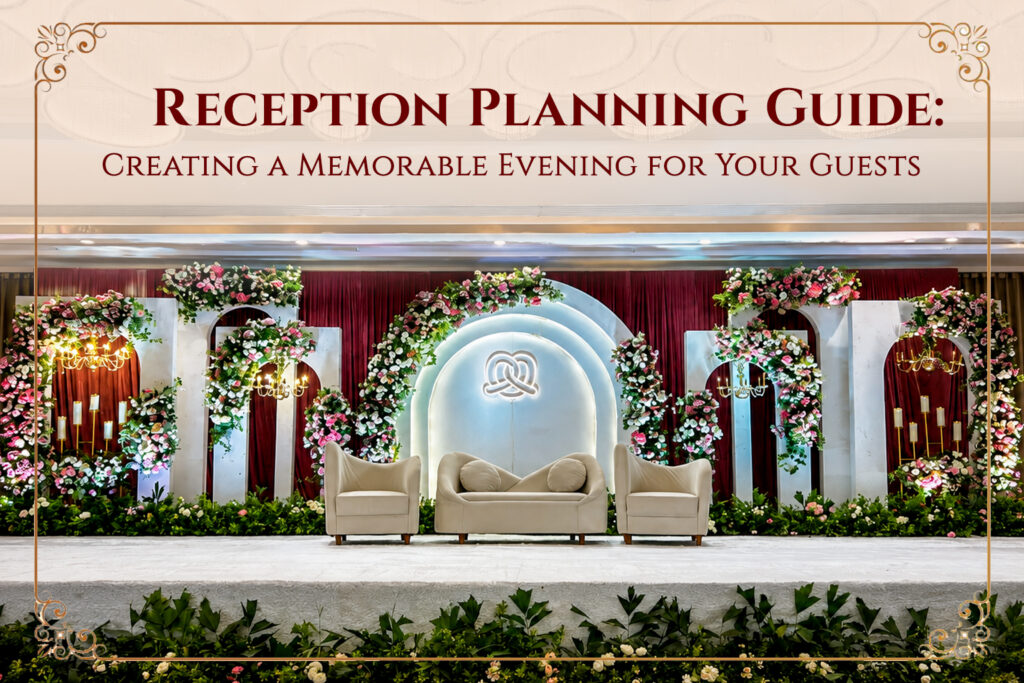
The wedding reception is the function most of your guests will attend. Some of them will have missed the haldi and the sangeet and many will not have been present for the ceremony itself. The reception is where the two families meet everyone properly and where the evening either flows or falls apart in slow motion.
Most families plan it last, after the wedding day details are settled. That is understandable and it is also why so many receptions run late, keep guests standing and end with the hosts eating cold food at midnight. A little structure changes all of it. This reception planning guide works through the decisions that shape the evening.
Understanding What a Wedding Reception Is Meant to Do
A wedding reception has no rituals to follow, which makes it the one function entirely defined by hosting. The purpose is straightforward. Greet every guest, feed them well and send them home comfortably.
That single sentence should decide your priorities. Anything that helps guests move, sit, eat and be greeted deserves budget and attention. Anything that only looks impressive in photographs comes second. Families who keep this order rarely regret it.
Building a Realistic Reception Timeline
A wedding reception timeline exists to protect your guests from waiting and to protect you from a rushed final hour.
Work backwards from the closing time. If the evening ends at eleven, dinner should be open by half past eight at the latest. Guests will begin arriving from seven onwards and the couple should be on stage by half past seven, because a stage standing empty while a queue forms is where the frustration starts.
Build in a gap of twenty minutes somewhere in the middle for the couple to step away, eat something and breathe. Plan it deliberately; otherwise, it will not happen. Keep performances and speeches short and place them before dinner opens, since attention thins once the food is out.
Managing the Greeting Line
This is the part of the evening that decides how guests remember it. A slow-moving queue with nowhere to sit undoes an otherwise beautiful reception.
A few arrangements help considerably. Run the queue along a wall rather than through the middle of the hall, so it does not cut across the room. Place chairs near the front for elderly guests and let a family member bring them forward when their turn approaches. Circulate welcome drinks and a light snack along the line, because a guest with something in hand settles into the wait.
Brief your photographer on pace before the evening begins. Three quick frames per group keep things moving and ask a cousin or a close friend to stand beside the stage and manage the flow. Somebody has to do this job and it should not be the couple.
Seating, Layout and Guest Movement
Walk the hall before you finalise the layout, following the route a guest will take from the entrance to the stage and then to the dining area. If those three paths cross each other, the room will feel crowded even with space to spare.
Reserve a block of seating close to the stage for elderly relatives, so they can sit through the evening and still see what is happening. Leave an open area where children can be children without running through the queue. If your reception venue has a lobby, use it as a holding space for arrivals rather than letting everyone funnel straight into the hall at once.
Food Service and Timing
Food is the part of the evening guests discuss for months and most complaints come down to access rather than quality.
Spread your counters. Several smaller stations placed apart from each other keep a crowd moving, because queues form wherever everyone converges. Keep water and beverages away from the food counters entirely, since that is a queue nobody should have to join twice.
Dietary requirements need settling early. Families following Jain practices or hosting a fully vegetarian gathering should confirm at the point of booking that the kitchen genuinely works that way rather than adapting on the day. A banquet hall that serves only pure vegetarian and Jain cuisine, as Bhanushali Banquets does across its venues, removes this concern before it becomes a conversation.
Finally, hold back a set of plates for the immediate family and the vendors. Both groups eat last and both are usually forgotten.
Music, Sound and the Feel of the Room
Volume is the most common mistake at a reception. Guests come to talk to each other and to the family and music loud enough to stop conversation empties a hall early.
Maintain the sound at a level that allows two people seated together to converse comfortably. Reserve higher volume for after dinner, when those who wish to dance will remain, while others will start to leave naturally. Request that announcements be made from a microphone located near the stage, rather than through the main speakers at full volume. This way, guests will be able to hear the words clearly instead of just perceiving a loud noise.
Coordinating with the Venue Team
Share your timeline with the venue in writing a few days in advance, not on the morning of the event. Include the arrival time of the decorator, the caterer, the photographer and the family and mark the moment dinner opens.
Ask who your single point of contact will be through the evening. One person holding the full plan keeps the evening steady, even with several teams working at once. This becomes even more important at our banquet hall in Nerul, where several functions may be taking place across different event spaces.
It also helps to choose a venue whose team has run receptions repeatedly, along with haldi, sangeet and wedding functions, since they will anticipate the pressure points without being told. At our banquet hall in Ghatkopar, experienced event teams coordinate with decorators, caterers and entertainers to keep every part of the evening running smoothly.
A reception that runs well looks effortless from the outside. Guests arrive, are greeted, eat well and leave without ever noticing the planning behind it. That is the whole aim of the evening and it comes from decisions made weeks earlier rather than anything arranged on the day.
Most wedding receptions run for about four to five hours. This gives guests enough time to meet the couple, enjoy the food and spend time with family and friends without the evening feeling too long.
A good reception venue should be easy for guests to reach, have enough space for your guest list, comfortable seating, good parking and a dining area that does not become crowded. An experienced venue team also makes the event much easier to manage.
It is best to open dinner after most guests have arrived and the initial greetings are complete. Serving food too late often leads to long queues and restless guests.
The layout affects how easily guests can move around the venue. A well-planned hall keeps the entrance, stage and dining area from becoming crowded, making the reception feel organised and comfortable.